.png)
Gaming as civic infrastructure: the QLeague experiment
Can you build a voter registration pipeline through a fighting game tournament? We tried. Here's what happened.
By Leonel Gomez
The hypothesis
At DUSA, we had a question that nobody had a good answer to: how do you reach Dominican-American men ages 18–35 for civic engagement? Traditional canvassing doesn't work — they're not home when canvassers knock. Phone banking doesn't work — they don't pick up. Social media helps but doesn't convert.
Gaming does. In 2019, we tested a hypothesis: if you build something they actually want to be part of — a real esports league, with real tournaments, at real venues — you can meet them where they already are and weave civic participation into that experience.
The QLeague model
The design was intentional: every QLeague event included gaming first, civic last. You didn't walk into a voter registration table. You walked into a tournament. The tournament was excellent. Then, embedded in the experience, was a voter registration station, a citizenship resource table, a conversation about the upcoming election. The civic infrastructure was inside the gaming infrastructure.
You can't bring people to civic engagement. You have to bring civic engagement to where people already are.
What the data showed
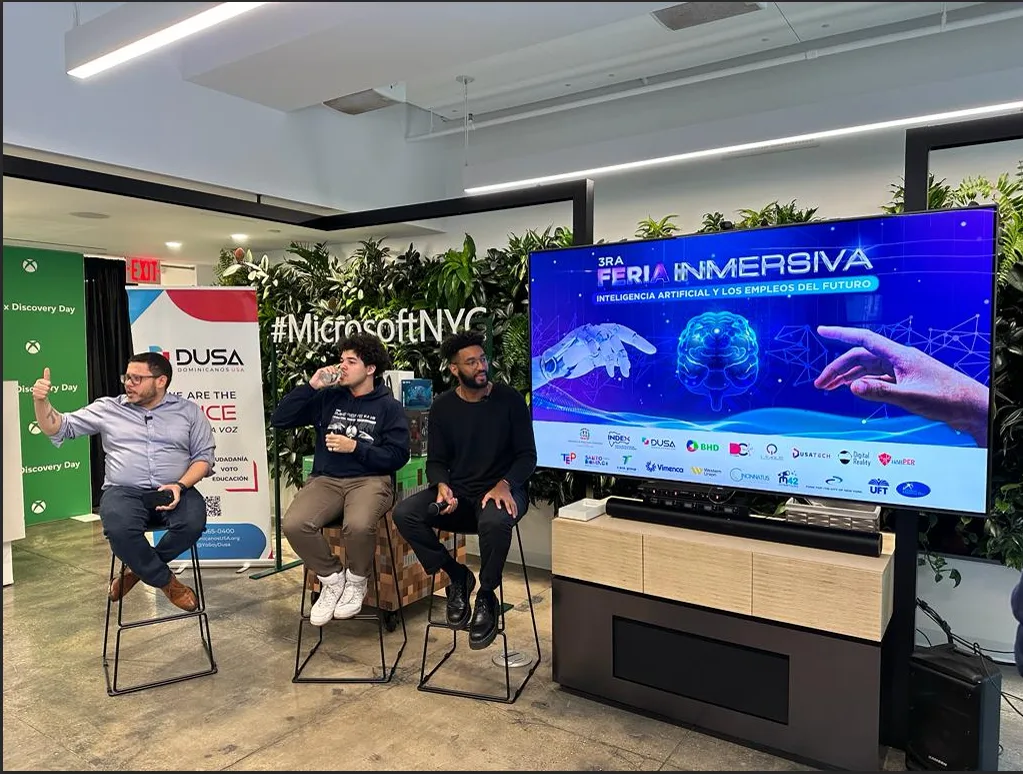
The Friendly Fire event series — monthly gaming nights at Microsoft Experience Center — became a consistent civic touchpoint. Our Eventbrite campaigns were generating 10,000+ impressions on minimal budgets ($209 for 10,452 impressions in one cycle). Email open rates from QLeague lists ran above 40%. These were engaged people who showed up physically, repeatedly.
The FDDE formally recognized QLeague in 2019. The Dominican Ministry of Foreign Affairs covered us in a government press release in 2022. By 2023 we were running simultaneous events in NYC and Santo Domingo with 34 scholarships distributed to community members.
What gaming teaches civic designers
Games have something almost nothing in the civic toolkit has: an intrinsic reason to show up. The game is the point. Everything else — the registration, the education, the networking — is additive. Civic designers should spend more time studying how games build and sustain community, because the same mechanics that keep someone at a fighting game tournament are the mechanics that could keep someone engaged in their local political process.
We proved it works. The question is who scales it next.
Where this led